
Quick answer: The right GPS dog fence supplier should help an OEM buyer verify the exact product configuration, test boundary behavior in the intended market, document firmware and safety logic, and confirm packaging, compliance, MOQ, lead time and warranty before a purchase order. A feature list alone is not enough.
This checklist is designed for pet brands, importers, wholesalers and distributors evaluating a GPS-based containment product. It explains the questions that reduce specification mistakes and help buyers compare samples consistently. It does not assume that every GPS fence is a tracker, app product or subscription service.
First confirm what type of GPS product you are sourcing
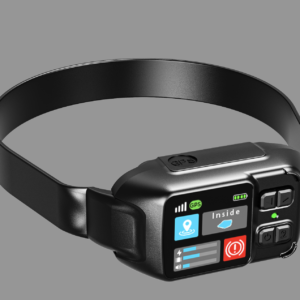
A GPS electronic dog fence creates an on-device containment boundary. It is different from a cellular GPS tracker that sends live location data to an app, and it is different from a handheld remote training collar. Mixing these product types in an RFQ can lead to incorrect quotations, manuals and marketing claims.
Before contacting a supplier, define whether your project requires:
- a GPS-based electronic containment collar;
- an app-connected tracker with cellular or subscription services;
- a remote training system; or
- a combined product with functions that must be verified separately.
For GPS containment products, the purchasing decision should focus on boundary setup, positioning repeatability, warning and correction logic, recovery behavior, collar fit, outdoor handling and the clarity of the user interface.
12 checks for evaluating a GPS dog fence supplier
1. Can the supplier identify the exact hardware and firmware version?
Ask for the model number, hardware revision, firmware version and change-control process on the quotation and approved sample record. A supplier should not silently change a positioning component, display, battery or firmware rule after sample approval.
If different versions exist, request a written explanation of the differences and confirm which version will be used for production.
2. Is the product a fence, a tracker or both?
Request a plain-language functional statement. An on-device status display does not automatically mean app tracking, SIM connectivity or cloud location history. Marketing pages, manuals and retail packaging should describe only the functions present in the supplied configuration.
3. How is the virtual boundary created?
Confirm the available boundary-setting method, adjustment steps, minimum and maximum settings, units of measurement and reset procedure. Ask the supplier to provide the current user flow rather than relying on a generic description from another model.
During sample testing, record how long setup takes, what the display shows and whether a first-time user can understand when the boundary is active.
4. What positioning test method is used?
Do not accept a single “accuracy” number without its test conditions. Ask where and how the value was measured, how many repeated crossings were performed, what terrain and weather were present, and how signal variation was handled.
Test the sample in open space and in realistic weaker-signal conditions for the intended market. Record each approach direction, warning point, correction point and return-to-safe-zone behavior. Our GPS dog fence accuracy and OEM test checklist provides a structured nine-test method.
5. What happens when the GPS signal changes?
A responsible GPS dog fence supplier should explain startup behavior, satellite acquisition, signal-loss behavior, recovery logic and the information shown to the user. Ask whether the product suspends, delays or changes output when positioning is not reliable, and verify the answer with the current sample.
General information about GPS operation is available from GPS.gov. Product claims should still be based on the exact device and test method.
6. Is the warning and correction logic documented?
Request the complete sequence for approach, warning, correction, repeated boundary events and return to the allowed area. If the supplier states that the product has an intelligent safety mechanism, ask for the trigger logic, time or repetition limits and reset behavior.
The training guide and user manual should match the firmware in the approved sample. Buyers should not publish an absolute safety claim without model-specific evidence.
7. Can the interface be localized correctly?
Check the display language, symbols, measurement units, warnings, setup steps and error messages. If the collar uses a TFT multi-page display, photograph every page during sample approval and confirm the final production wording.
For private-label programs, define the manual language, packaging language, barcode labels, logo position and carton markings before quotation.
8. Are waterproof and outdoor claims supported?
A supplier-stated IP rating should be linked to the exact model and configuration. Request the current test report and confirm the product identification, report holder, standard and date before using the rating in advertising or retail packaging.
Sample handling should also cover charging-port protection, repeated wet and dry conditions, collar material, contact points and retention on the intended dog type.
9. Are battery and charging details complete?
Confirm battery capacity, charging time, expected operating conditions, cable type, charger requirements, low-battery indication and any transport documents required for the destination market. Do not copy battery or runtime values from a visually similar model.
10. Does the package match the quotation?
Count every accessory in the approved sample. Confirm the main unit, manual, training guide, boundary flags, charging cable, silicone covers, contact points and any model-specific items. Record the neutral box, customized box and export-carton information separately.
Packaging dimensions and weights should be reconfirmed on the approved production specification and proforma invoice before calculating freight or marketplace fees.
11. Which documents apply to the exact model?
Ask for a model-level document list rather than a general factory certificate pack. Verify the product name, configuration, report holder, applicable standard, date and destination market for each compliance or battery-transport document.
If a document is unavailable or does not identify the quoted model, do not represent the product as certified until the gap is resolved.
12. Are the commercial terms written clearly?
Confirm sample price and preparation time, customization scope, MOQ, production lead time, payment terms, inspection method, spare parts, warranty and after-sales handling. Guangzhou Pet Super Factory Co., Ltd. currently confirms the following general terms:
- MOQ: Negotiable; the actual quantity depends on model and customization.
- Lead time: Varies by product and order configuration.
- Warranty: One year; coverage, exclusions and the handling process should be written into the quotation or order agreement.
ZF500 vs ZF550: which sample should an OEM buyer request?
| Comparison point | ZF500 | ZF550 |
|---|---|---|
| Current positioning | Standard GPS electronic containment comparison model | Upgraded dual-frequency GPS wording with a heavy-duty, large-dog-oriented format |
| Display | TFT color screen with multi-page switching and on-device status data | TFT multi-page display with on-device status data |
| Function settings | Adjustable levels; confirm the current level structure | Adjustable levels; confirm the current level structure |
| Safety wording | Supplier lists an intelligent safety mechanism; verify the logic | Supplier lists an intelligent protection function; verify the logic |
| Current standard accessories | Main unit, manual, training guide, 20 flags, magnetic charging cable, silicone covers and contact points | Main unit, manual, training guide, 20 flags, magnetic charging cable, silicone covers and contact points |
| Key sample question | Does the standard platform meet the target market’s setup, display and boundary-behavior requirements? | Does the dual-frequency wording and heavier collar format provide a meaningful advantage in the intended use case? |
Review the current ZF500 GPS wireless dog fence and ZF550 dual-frequency GPS dog fence pages before requesting samples. Battery data, satellite configuration, waterproof evidence and destination-market documents should be reconfirmed for the quoted version.
A practical sample approval workflow
- Define the use case: destination country, property type, terrain, target dog size, retail channel and required functions.
- Request current documents: specification, manual, packaging list, firmware identification and available test reports.
- Approve the sample identity: photograph labels, display pages, accessories and packaging; record hardware and firmware versions.
- Run repeatable field tests: use the same route, directions, settings and scoring sheet for every candidate.
- Resolve gaps in writing: document any firmware, manual, packaging or accessory changes before production approval.
- Confirm the commercial order: lock the model, configuration, MOQ, lead time, warranty, inspection method and approved artwork.
RFQ information that helps you receive an accurate quotation
Send the supplier a complete project brief instead of asking only for the lowest price. Include:
- target model or required product type;
- destination country and sales channel;
- expected order quantity and sample quantity;
- target dog size and intended property scenario;
- logo, color, packaging and manual-language requirements;
- required compliance and battery-transport documents;
- desired sample date and target order date; and
- any mandatory firmware, warning or safety requirements.
This information allows a GPS dog fence supplier to identify the correct configuration, explain what still requires confirmation and prepare a more useful sample and quotation.
Frequently asked questions
Is a GPS dog fence the same as a GPS tracker?
No. A GPS fence can create an electronic containment boundary on the device without providing app-based live tracking. Confirm whether SIM, cellular service, an app or a subscription is actually included before marketing the product as a tracker.
Should buyers choose the model with the best headline accuracy?
Not without the test conditions. Repeatability, recovery behavior, warning logic and performance in the intended environment are more useful than one unqualified number.
Can ZF500 and ZF550 use private-label packaging?
Private-label options can be discussed. Logo method, packaging, manual language, MOQ and artwork requirements must be confirmed for the selected configuration.
How should an OEM buyer verify IP67?
Request the current model-specific report and check its product identification, report holder, test standard and date. The physical sample should also be reviewed for charging-port protection and repeated outdoor handling.
What is the fastest way to compare two suppliers?
Give both suppliers the same written use case, document request and field-test scorecard. Compare the complete evidence package and sample behavior rather than feature wording alone.
Request GPS dog fence specifications and samples
Browse the current GPS dog fence range, then send your destination country, expected quantity, sales channel, branding requirements and required documents to jessie@petsuperfactory.com. You can also call or WhatsApp +86 136 4030 6475, or use the contact form.
We will confirm the current configuration, negotiable MOQ, model-specific lead time, sample arrangement and one-year warranty terms before quotation.